|
 |
|
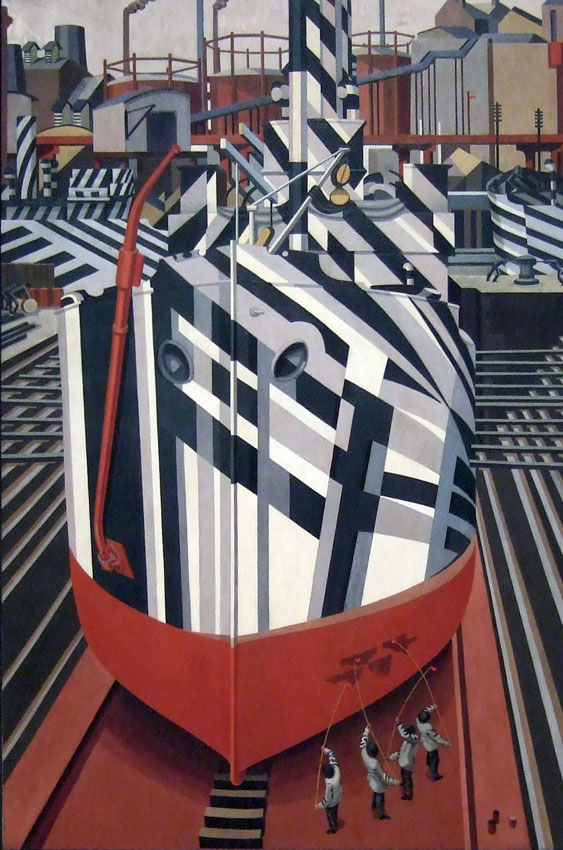
Front cover:
Dazzle Ships in Drydock,
Liverpool 1919 – Edward Wadsworh
National Gallery of Canada Ottawa
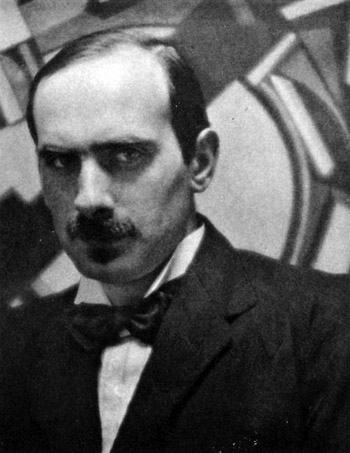
Wadsworth
was born on 29 October 1889 in Cleckheaton, West Yorkshire, and was
educated at Fettes
College in Edinburgh. He studied engineering in Munich between 1906 and 1907, where he studied art in his
spare time at the
Knirr
School. This provoked a
change of course, as he attended Bradford School of Art before
earning a scholarship to the Slade School of Art,
London. His contemporaries at the school
included Stanley Spencer, CRW Nevinson, Mark Gertler, Dora
Carrington and David Bomberg.
Wadsworth's work was included in Roger Fry's
second Post-Impressionism Exhibition at the Grafton Galleries, 1912,
in London, but he changed allegiance shortly after through
friendship with Wyndham Lewis, and exhibited some futurist-derived
paintings at the Futurist Exhibitions at the Doré Gallery. He was a
signatory of the Vorticist Manifesto published in BLAST the next
month.
A Vorticist Exhibition, June 1915 at the Doré
Gallery was followed by a second edition of BLAST published to
coincide with the show.
Wadsworth
contributed to both, but signed up for the navy shortly after. His
fellow vorticist Henri Gaudier-Brzeska was killed at the front and
Bomberg and Lewis found that their belief in the purity of the
machine age was seriously challenged by the realities of the
trenches. Wadsworth
spent the war in the Royal Naval Volunteer Reserve on the island of Mudros
until invalided out in 1917, transferring dazzle camouflage designs
onto allied ships. Always a fan of modern ships,
Wadsworth
was to utilise nautical themes in his art for the rest of his
career.
After the major painting
Dazzle-ships in Drydock at
Liverpool, 1919, Wadsworth moved away from the avant-garde in
the 1920s, and adopted a more realistic style. Towards the end of
his life his work became increasingly strange and surreal, although Wadsworth never had any formal links with the
official Surrealist movement.
|