|
|
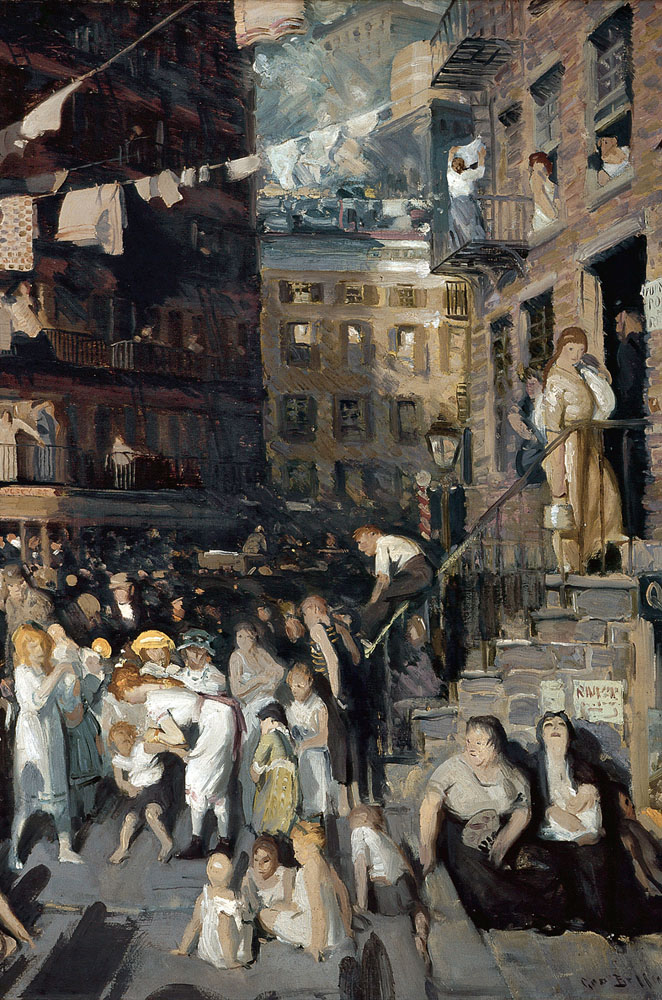
Cover: The Cliff Dwellers
– George Bellows (1913)
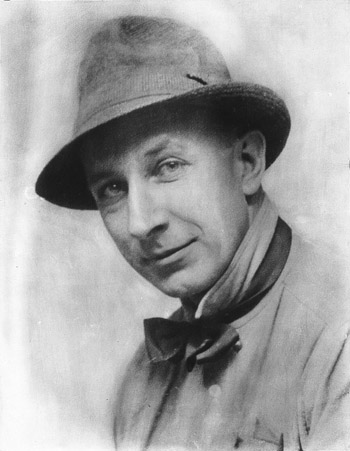
George Bellows (1882 - 1925)
Cliff Dwellers (1913)
is an oil on canvas painting by George Bellows that depicts a
colourful crowd on New York City's Lower East Side, on what
appears to be a hot summer day.
The painting is a representative example of the Ashcan School, a
movement in early-20th-century American art that favoured the
realistic depiction of gritty urban subjects. In Cliff
Dwellers, people spill out of tenement buildings onto the
streets, stoops, and fire escapes. Laundry flaps overhead and a
street vendor hawks his goods from his pushcart in the midst of
all the traffic. In the background, a trolley car heads
toward Vesey Street.
The painting, made in 1913, suggests the new face of New York.
Between 1870 and 1915, the city's population grew from
one-and-a-half to five million, largely due to immigration. Many
of the new arrivals—Italian, Jewish, Irish, and Chinese—crowded
into tenement houses on the Lower East Side—the area north of
the Brooklyn Bridge, south of Houston Street, and east of
the Bowery. Among them were thousands of Eastern European Jews,
who found temporary or permanent shelter along streets such as
East Broadway, the setting for Cliff
Dwellers. The city had never seen this kind of density
before.
Within the context of Cliff Dwellers the audience is able to
convey a sense of congestion, overpopulation and (primarily seen
in the foreground) the impact of the city among the youth.
Within the book The Paintings of George Bellows, a historical
account of how adamant “urban reformers” were during the early
twentieth century as thousands of immigrants migrated to
neighbourhoods of New York. “The children in Bellows's
Cliff Dwellers,
innocent as they appear, exhibited no effects of the requisite
“Americanizing” process urban reformers considered crucial to
the maintenance of social order.”
Paired with the scrutiny heaped upon immigrants was the fact
that they were made to live in conditions, which were made
unbearable by the toll of industrialization within these areas.
Small and dense were the living quarters of many who worked in
similar environments in factories. Small, dense, dark, which can
easily be seen within the painting and helps promote the idea of
how industrialization has impacted the working class lifestyle.
New York Realists were called by critics as the "revolutionary
black gang" and the "apostles of ugliness". A critic, referring
to their depictions also conferred them the pejorative
label Ashcan School which became the standard term for this
first important American art movement of the 20th century.
Moma
|