|
|
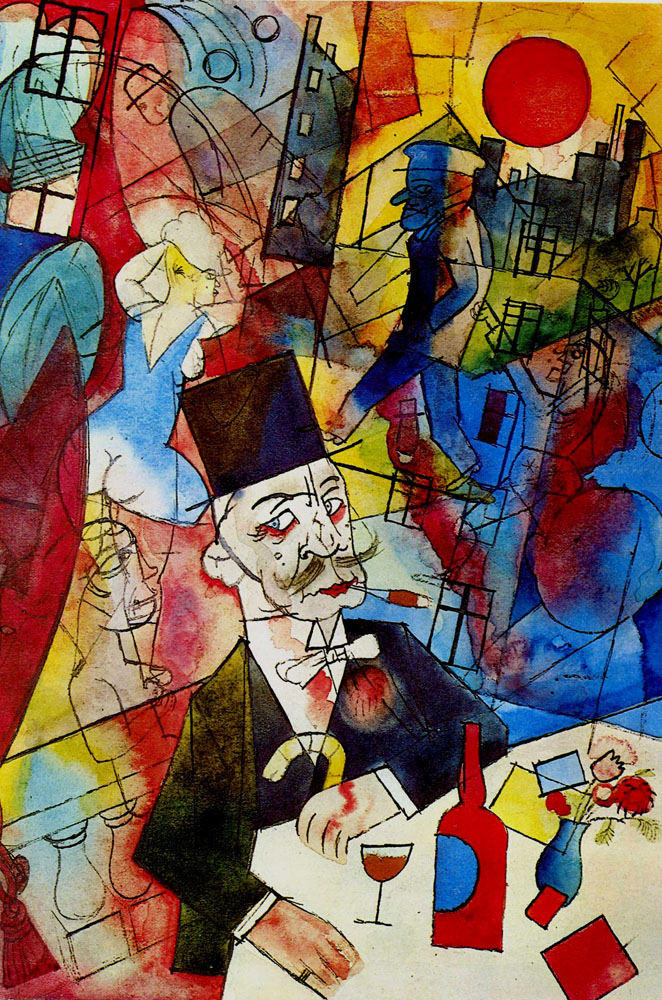
Cover: Ecce Homo –
George Grosz (1923)
Let us summarize: the meaning, nature, and history of art are
directly related to the meaning, nature, and history of society.
The prerequisite for the perception and evaluation of
contemporary art is an intellect directed at the knowledge of
facts and of correlations with real life and all its convulsions
and tensions. For a hundred years, man has been seizing the
earth's means of production. At the same time, the fight among
men for possession of these means assumes ever more extensive
forms, drawing all men into its vortex, there are workers,
employees, civil servants, commercial travellers, and
stock-holders, contractors, merchants, men of finance. Everyone
else represents stages of these two fronts. The struggle for
existence of a mankind divided into the exploited and the
exploiters is, in its sharpest and final form: class warfare.
Yes, art is in danger:
Today's artist, if he does not want to run down and become an
antiquated dud, has the choice between technology and class
warfare propaganda. In both cases he must give up 'pure art.'
Either he enrols as an architect, engineer, or advertising
artist in the army (unfortunately very feudalistically
organized) which develops industrial powers and exploits the
world; or, as a reporter and critic reflecting the face of our
times, a propagandist and defender of the revolutionary idea and
its partisans, he finds a place in the army of the suppressed
who fight for their just share of the world, for a significant
social organization of life.
George Grosz Art Is In
Danger Berlin 1925
|