|
|
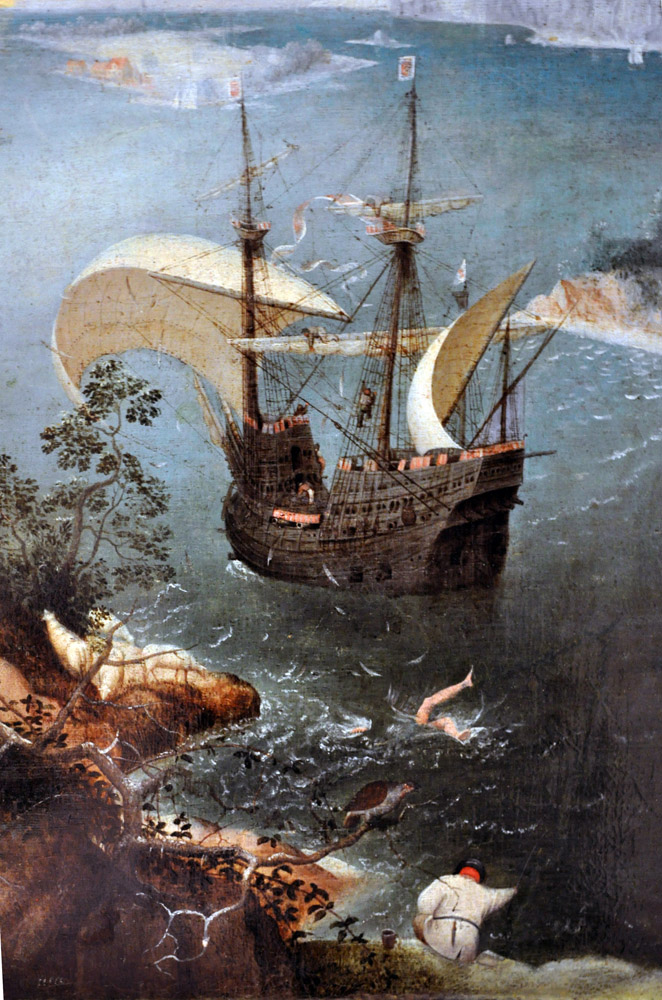
Cover: The Fall of Icarus - Pieter Breugel 1590
One common view is that the painting illustrates people's attitude of not caring about other people's suffering, or even deliberately ignoring it. This view notes that no-one has made any effort to help Icarus, even though his dramatic fall must have been obvious . So, the artist is basically converting the Icarus myth into an example of the proverb "A man dies, and the world hardly blinks". This attitude would also extend to the presumed suffering represented by the figure in the shrubbery if in fact it were a corpse.
The notion of "turning away" from suffering is taken from the
poem
Musee des Beaux-Arts
(1938), by WF Auden, written after seeing the painting. Auden
says:
In Bruegel's Icarus, for instance: how everything turns away
Quite leisurely from the disaster the ploughman may
Have heard the splash, the forsaken cry,
But for him it was not an important failure: the sun shone
As
it had to on the white legs disappearing into the green
Water; and the expensive delicate ship that must have seen
Had somewhere to get to and sailed calmly on.
For Auden, the painting confirmed his generally dispirited
belief in universal human failure. It was a view which had been
fostered by his recent first-hand experiences in observing the
atrocities of the Sino-Japanese war. This seems to have struck a
chord with some 20th century commentators who may have
experienced human cruelty and suffering on a massive scale in
two world wars.
Philip McCouat
|